 Print This Post
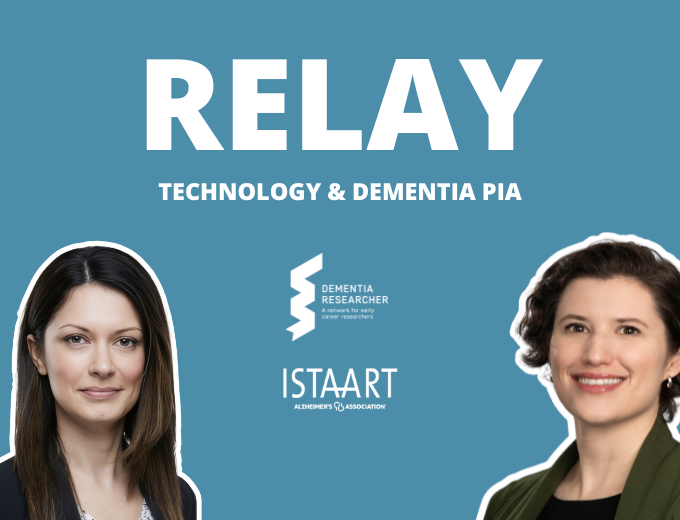
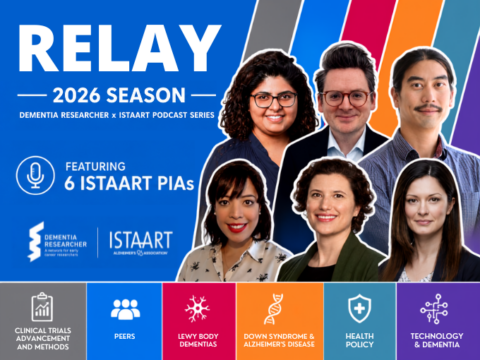
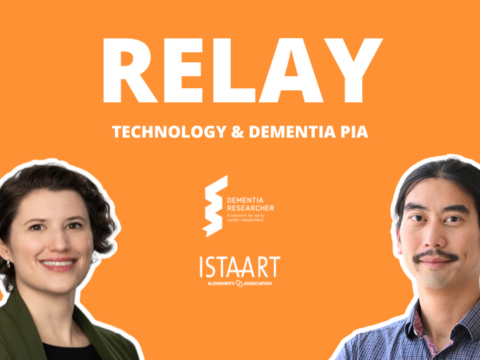
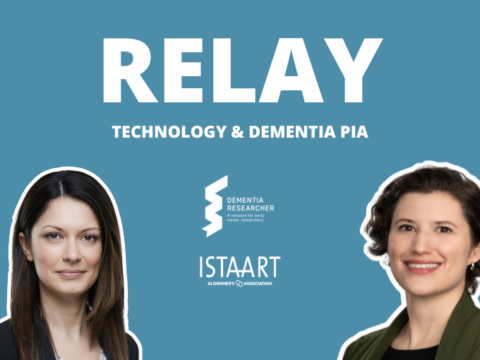
Welcome to the seventh season of the Dementia Researcher X ISTAART PIA Relay Podcast. Across six episodes, leading early career and senior researchers hand the mic from one ISTAART PIA to the next, giving you an honest, peer-to-peer tour of where dementia research is actually heading, from wearables and biomarkers to policy and trial design, in the run-up to AAIC.
Sleep might be one of the earliest windows we have into brain health, and Dr Vanessa Young thinks the way we measure it is about to change. Fresh from finishing her PhD in May, Vanessa is a postdoc at the Glenn Biggs Institute and Communications Chair of the Technology and Dementia PIA. She studies sleep and the ageing brain, where the relationship seems to run both ways: as dementia develops, sleep gets worse, and poor sleep may feed back into the disease. With host Dr Carla Abdelnour, she gets into digital biomarkers, why wearables let you capture sleep continuously at home rather than in a one-off sleep study, and the move from wearables to "nearables", bed sensors and room radar that ask nothing of the participant at all. They also cover the analysis headache that comes with years of continuous data, the equity problem when a study needs home Wi-Fi, and what the PIA has planned for its full-day AAIC preconference on AI.
Takeaways
- Sleep and dementia feed each other, so sleep is worth studying as somewhere we might • actually step in and help.
- Wearables capture sleep night after night at home, which reaches people who live nowhere near a big sleep centre.
- The field is shifting from wearables to "nearables", sensors in the mattress or radar in the room, to cut burden and bias.
- Years of continuous data brings its own problem: telling meaningful signal apart from background noise.
- If a study needs Wi-Fi to send its data, it quietly excludes people, so digital equity has to be designed in.
Narrator
Hello, and welcome to Season 7 of the Dementia Researcher ISTAART Relay Podcast. In this series, members of the ISTAART Professional Interest Areas interview each other about their PIAs and the hot topics in their fields. Each guest then becomes the next episode's host, passing the conversation along from one researcher to the next. We're releasing one episode a day in the run up to the Alzheimer's Association International Conference this year in London and online, showcasing the work of the ISTAART PIAs.
Thank you for listening.
Dr Carla Abdelnour
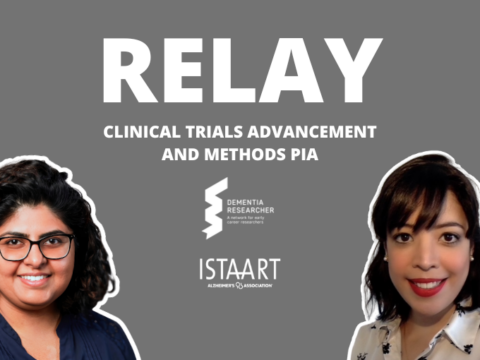
Hello, and thanks for tuning in. I'm Dr Carla Abdelnour, and I'm a clinician scientist. I work at the Memory Unit of the Hospital Sant Pau in Barcelona in Spain. I also work on the Clinical Trials Advancement and Methods PIA as Vice Chair, and I will start my role as Chair after AAIC this year. Today, I'm delighted to be talking with Dr Vanessa Young from the Technology and Dementia PIA. Hi, Vanessa, how are you?
Dr Vanessa Young
Hi, Carla, thank you. It's lovely meeting you, and congratulations. My name, again, as you mentioned, is Dr Vanessa Young. I am a postdoc at the Glenn Biggs Institute for Alzheimer's and Neurodegenerative Diseases at UT Health San Antonio in San Antonio, Texas, United States, working under the mentorship of Dr Sudha Seshadri. And a fun fact, I just finished my PhD in May in Translational Science, so this is a really fun moment for me.
And I also serve as the Communications Chair for the Technology and Dementia PIA, which is the group I am representing today.
Dr Carla Abdelnour
Well, congratulations on finishing your PhD. That is always a milestone, and I'm sure you have done an amazing job. And actually, before we start talking about your PIA, I was wondering if you can talk to us a little bit more about your research.
Dr Vanessa Young
So, I study sleep and the ageing brain, of course. And what pulled me into it is that the relationship seems to go both ways. And when I started studying sleep, I didn't know, but it's actually very complicated and complex to study sleep. We have known for a long time that as dementia develops, people's sleep gets worse, but it looks like it runs in the other direction too, that poor sleep might actually feed back into that disease itself.
So, there is this idea, and we are still researching it, that sleep is when the brain sort of cleans the house, clearing out the waste, including some of those proteins that are linked to Alzheimer's disease. And I always like to make the analogies, like a dishwasher that removes all the debris from the dirty dishes. So, you can kind of picture a bit of a loop where bad sleep and brain changes feed each other over time.
And so that's why it's complicated, but also, from my side, very exciting to study. And honestly, either way you look at it, it tells you the same thing, that sleep is worth exploring and studying well because it might be somewhere that we can actually sleep in and step in and help for intervention, for example.
And so, the frustration, I think, sometime is that what we know about sleep and dementia, especially at the population level, is often through subjective measurements because of the cost. Sometimes, we ask about, the questions are limited to, for example, sleep durations. Not that that is not important, but it is also one variable of sleep. But sleep, again, has many other features that needs to be studied that contribute to that complexity.
And for my development as a career progression, I am incorporating that digital measurement, and that's why I am part of the Tech and Dementia PIA.
Dr Carla Abdelnour
That's so cool. I think researching about sleep is super important. We spend a lot of our lifetime sleeping, so it must be a very important process, right? Can you tell us a little bit more about how did you get interested in studying sleep? How did you arrive to that particular field?
Dr Vanessa Young
I think it was a little bit from being here at the Glenn Biggs Institute because one of my coworkers was doing a study on sleep with respect to Parkinson's disease, which that population usually develops REM sleep disorder and other sleep disturbances decades before their motor disturbances. And in addition, there is some of the personal side. So, when I was myself young, I was myself developed with a neurological disorder that is very much sensitive to sleep.
And so back then, I learned that sleep is very important. So that's my personal side. And then, as I became involved within the research, and I think it was in 2019, I started working with the military population and TBI, traumatic brain injury. I also observed that they also experienced a lot of trouble sleeping and also that those who did not sleep well had a very hard time recovering from their brain injury and experienced more cognitive issue.
And so, I think then I started thinking, okay, I think sleep has a very important role besides, you know, helping us feel refreshed in the morning, and that's why I wanted to delve more into that sleep research.
Dr Carla Abdelnour
Sounds super interesting. And yes, because it also could be an intervention, as you mentioned. And I was also thinking about, because you mentioned that you just completed your PhD, and I would like to learn more about that. So, can you summarise what were the main findings of your PhD?
Dr Vanessa Young
So, for my PhD, I basically delved a little bit more in the realm of sleep duration and blood-based biomarkers. And we looked at p tau 181, NfL, GFAP. And what we explored is that there was a correlation, this is cross sectional analysis. And what we explored is that there was a U-shaped relationship between p tau 181, like long sleep, especially after 8.5 hours, and p tau 181 specific. But that relationship did not really hold for the other biomarkers.
And specific, for example, NfL was very sensitive to kidney function. So, we had two models. In the first model, it was not adjusted for kidney function, but the second model was. And so, we lost that significance in the second model. And so that was very exciting to see. And prior doing this first analysis, we also had done a systematic review to see what was already done, what was already there.
And something that I have observed is that a lot of the studies, as a community, we are using a lot of, the scales are different sometimes. Some people may be using the MOS, some people may be using the PSQI, or within the realm of sleep duration, the cutoffs are different. And when we're looking at the blood-based biomarkers, it's also the way the variable is treated is different. That makes it a little bit difficult then to run a meta-analysis.
So that was the part of my PhD and the primary findings.
Dr Carla Abdelnour
Great, and what do you think will be the next steps after these findings? What would you like to see in the field in the upcoming years?
Dr Vanessa Young
What I would like to personally see, or what I'm working on, is including more, doing more mixed methods studies where we are including more of the subjective measurements but also pairing more with objective measurements. Like, for example, these digital measurements that right now we have available. And these digital measurements, such as wearables, could be an example, but there are also sleeping mats that could be used.
Are important because they are passive, and they allow you to measure the sleep of each individuals in a more continuous way throughout the week. And you can also assess the variabilities between one night and other. You can also check for that sleep fragmentation that is very important, and it also becomes a little bit more accessible for those individuals that don't really live near big centres.
Like, we work a lot with people who are in the border regions of Texas, but I have colleagues, for example, who live in the UK, and they have similar instances where, if you are near UCL, for example, you have access to big hospitals and institutions, (indistinct), might be a little bit harder to have access to big centres and go and perform a sleep study.
So having these new devices that could be shipped, and then we get the data here, is both, I think, great from a research perspective but as well as from a clinical perspective, because then the providers could email, mail, not email, could mail these devices for capturing their sleep and be used for diagnostic purposes.
Dr Carla Abdelnour
Yes, I think that's a very good point. With digital biomarkers, you can reach different populations that cannot access in person, and you can get very good quality information or data. Just I think it's super interesting. I also think that digital biomarkers give us so much information, and I was wondering if you can tell us a little bit more on, because I come from the CTAM PIA and we think about methodology, so how do you analyse that volume of data?
I think you get so much data, and how can you maybe disentangle what might be meaningful data from the background noise that might not be clinically meaningful?
Dr Vanessa Young
Are you talking about, for example, if from the wearable device, we have a lot of data that we are capturing, and then how you would be measuring all that data?
Dr Carla Abdelnour
Yes, yes, because you get a lot of variables that you can measure, right? It's the duration, the variability. There are so many variables. So how do you manage that?
Dr Vanessa Young
That's a very great question, and right now, we are entering the stage with one of our study where we are starting to measure the first cross-sectional data that we collected. And what I can tell you at the moment, what we are trying to understand, what we measure, and what we might not be measuring, is the first months, for example, we usually do not include because there might be noise.
And then we try to align and harmonise for everybody what is their baseline because not the entire cohort started at the same time. So, some people started in October, some people started in November. And then what you can do, based on other study, for example, we collaborate with Oregon Health & Science University, who had other and wider experience with the wearable devices. You can estimate their sleep stages, for example.
So, you have the continuation, but you can also estimate their sleep stage, which is very important because we know that with the ageing process, these sleep stages tend to decrease. Some people do not enter in deep sleep, which becomes a problem, and then see if that sleep is fragmented. That is also something that we want to see. But what the wearables also provide is their heart rate variability. That helps you estimate the sleep stages, and also their breathing.
That's something else is also, I don't know if that answers your question fully, but it's something that is exciting and complex. And I'm also honest, like, I'm learning right now on how to really analyse all the big data. We have more than 100 participants. And, yes, with like four years of data. And it's scary. (laughs) Exciting and scary at the same time, but I know it will be worthwhile, and it will provide a lot of insight.
Dr Carla Abdelnour
Yes, that sounds super exciting, although complex for sure. But I think that's a very good way to get to personalise medicine, right? 'Cause it's the measure for that person at that time, and we can actually monitor people. It's not that you come to one visit, and I see you in three months or six months. So, its daily changes, and I think that's very exciting. Although, of course, the amount of data might be very complex.
And actually, I think that's a really good segue to my next question because I would like to know, Vanessa, what are the really hot topics and exciting areas in your field at this moment?
Dr Vanessa Young
That's a great question. I think that there is so much happening right now. I think that one absolutely that excites me the most is that, as we discussed, that sleep is one of the, obviously, the earliest windows into that brain health, because we know that when we don't sleep well, we don't feel ourselves, and we are slower, or we are not able to pay attention ourselves, even if we don't necessarily have cognitive decline.
And with these wearables, we can finally capture it at home and, like you said, in a continuous way so that we don't have any missed data when these changes are actually occurring with relation to other symptoms. And so that's definitely exciting. What is also important is that these measurements are occurring at their homes and not in an artificial environment. And that is important.
That's why we also remove those first months sometimes because, otherwise, they might be biassed because they know they're wearing a wearable now. And so, we want them to kind of forget. Like we don't want them to know. And after a while, you get used it, and you don't think anymore that you are wearing, that they're bias, and it becomes part of you.
And again, we are also able to measure other components like the breathing, the heart patterns, and the movements, the physical activities that are so much related to brain health, and long ago, I think that would be almost like fiction. And the other big shift to me is that, and I'm not an expert by any mean, I just learned about this through a colleague, there is a shift going from wearables to something called nearables.
And it's basically adding sensors in the mattress or radars in the room so that the participants are not wearing anything at all. And that is important for two things, because you forget at a faster rate that you are part of a research study, so it removes that bias. But it also removes the burden to the participants. So, you don't need to charge the devices.
You don't need to remember that, oh, I need to put my watch on this charger because the data needs to be deployed to the platform that the researchers are using. And especially for our populations, who might be having memory problems, releasing that task for them is very important. Now, on the other hand, the question I have, and I want to learn more is, is this feasible? Is this accepted?
Because I don't know what it entails to have a radar in the home or (laughs), are people happy to have these kinds of devices at home? Does it mean I need to put a nail in the walls? Are there any damages? I don't know. (laughs) So that's the part that I'm curious. But I learned recently, and I think that's a very hot topic.
And I think it will be able to collect more quality data because if I don't forget to charge my phone, when I forget to charge the wearable, then I don't get data. But if that is continuous, then it's more on the researcher than on the participant. There is no interruption. And then definitely, there is a lot of talk on the digital equity because oftentimes, when we work with wearables, the participant needs Wi-Fi, for example. Otherwise, you can't receive the data.
And so how can we make these study where technology is involved, more open to everyone so that if you don't have Wi-Fi, what can I do as a researcher to ensure that those who may have financial restraints or other issues because of their location, and maybe internet is not there anymore, can be still part of this study? So those are, I think, the hot topics, because then, otherwise, we have sampling convenience bias in research. Yeah.
Dr Carla Abdelnour
That sounds super interesting. Thank you very much. I also was wondering if there is anything about using AI for analysing the data or trying to capture what might be meaningful data. Do you know of anything that might be doing, somebody or a group that is using AI or a type of agent for studying sleep?
Dr Vanessa Young
So, I'm not yet, although I know with the Technology and Dementia PIA, this year, we are really focusing on AI. And a lot of my coworkers, especially within the clinical field, are looking into AI, for example, on how to score the PET, for example. That's one of the parts. And creating learning models or estimating who might be at higher risk of dementia based on the data that has been captured.
However, that's the extent on the knowledge I have right now is AI is definitely an area that I plan on growing, and that's why I'm excited to be part of the PIA. But I don't have a lot of expertise in that area.
Dr Carla Abdelnour
I think that's the perfect segue for my next question, because I think you're maybe in the best PIA, right, in the Technology PIA, because you're interested in digital biomarkers but also AI. So, I want to know, Vanessa, how does the work of your PIA support your field of research right now?
Dr Vanessa Young
I think, in a way, my field just is like technology and dementia. The two, the two. So, this PIA is where everything is basically happening. That's the way I see it. It's where the methods, people and the research people, the statisticians, and the clinicians, as well as industry people are meeting and are having big conversations on how we can further the field.
And that matters because the hard problems sometimes are the validation, the algorithms, the equity of access, as we mentioned, the data standards. And I don't think that we can solve these problems if we work in isolation. So, we need really to work as a group together. And there is something personal in this for me as well because the Technology and Dementia PIA grew out, is actually the kind of in-home sensing research I now do.
So, in a real sense, if you like, that community really helped build the field I'm working in right now. So, this PIA was founded by Dr. Jeffrey Kaye and is the one who started first deploying all these CART platform with all the at-home sensors and the devices and the wearables, and with whom I now collaborate from Texas and his group is in Oregon. So, it's been great. It has been definitely doing a lot for the work I do here.
Dr Carla Abdelnour
Definitely. I think you mentioned that it has helped you network with other people, and also, it seems like a very collaborative environment. We do need different people with different perspective to tackle these questions. And to dig a little bit more about yourself, I would like to know what brought you to the Technology PIA. How did you get involved?
Dr Vanessa Young
So, I think it started with, again, the people that I mentioned. So, it was back in 2022 when I started working here at the Glenn Biggs Institute. And we launched what we call the COMPADRE study, which is home based technology study where we have sensors and clinical measurements. And this study was initiated by Dr. Gonzalez in collaboration with ORCATECH at Oregon Health & Science University.
And that's where I became very acquainted with, and now I call them family and friends, with Dr. Jeffrey Kaye and also Alison, Linda. And two years later, then I attended my first Alzheimer's Association International Conference. And I saw when you registered that there was a preconference, and I was like, okay, I guess I will attend. This seems relevant to me. I will go. And I remember I was terrified (laughs) because, again, I didn't know anybody.
I was very new to the field. And then when I enter, I was like, oh, I know a couple of faces. And then I became more involved, and we continued to work with Jeff. And then last year, they told me, "Hey, just so you know, the elections are coming up. If you'd like to nominate yourself, I think you would be a good candidate for the Communications Chair.
Why don't you give it a try?" And I was like, oh, there is no way that anybody's going to vote me, but here I am. (laughs) So that's how I became more involved with the Tech and Dementia PIA.
Dr Carla Abdelnour
That sounds amazing. Yes, I think what we have discussed previously also is that the PIAs give you the opportunity to meet people and to collaborate with different people. So, it's a great platform to do your research. So, if you have a particular interest, just join one of the groups. There are a lot of opportunities and different groups, and the Technology PIA is one of them. I think I'm a member, but my calendar is too busy.
But definitely, I will check out what you will be doing, Vanessa, because I love tech stuff. It is just that, yeah, I have very different interests. So, I'll try to make some room in my schedule to follow you guys also. And on that note, yes, on that note, I want to know, what are the plans that the Technology PIA has for AAIC in London?
Dr Vanessa Young
We actually have a very busy schedule in London. So again, I think the Technology and Dementia PIA and the Neuroimaging are the only two PIAs that have a full day preconference. Don't quote me on that, but I think the others have like more PIA Day or things, so that excited. So, our flagship is the preconference that is Saturday, July 11, which is the day before AAIC opens. And again, it's a full day.
And the theme this year involves AI, as I mentioned earlier. And we open with a keynote using AI and the smartwatch data to see if we can detect Parkinson's disease earlier. And then following that series, we have data blitz. So, when people submit their abstracts to AAIC, then they can select whether or not they want their poster, their abstract to be considered for the Tech and Dementia preconference. So, they will present twice.
So, we have selected, I think, 76 for the preconference. And from those, then we select a few for a data blitz, which is a rapid-fire talks, and it's specifically for early-career researchers and also includes PhD students. And then we select a winner. So, for anyone who is listening for the next one, so be sure that you select that preconference if your topic is relevant to the Tech and Dementia sphere.
So, after that, we have a scientific session on wearables in the wild, sleep activity, and multimodal sensing, which is very much the corner of my world. So, I'm very excited to meet other scientists. And then I also get to moderate a panel right before the lunchtime on skills and dementia technologies, bringing industry and academic voices together, which is also very important because I think we need both together.
And then the other part that is very new and exciting is that it's new for this year. We wanted to involve more attendees. So, the whole afternoon is on AI, again, and dementia research. And instead of just having expert talks, we built in small-group interactive breakout sessions so that the attendees are not just listening, especially after lunch and then you kind of fall asleep. So, they actually were collaborative throughout with questions on things like harmonisation and AI-enabled trial design.
And then the groups report back, and we pull out the takeaways as a room. So again, we designed that within purpose to involve the audience more. And I just wanted also to highlight that the preconference is in-person only, and it requires a separate registration from the regular AAIC conference.
Dr Carla Abdelnour
Well, you will be super busy then, right, Vanessa? There are a lot of things happening during AAIC, all of which sound super exciting. So, I will definitely check out some of those. I think you mentioned that you will be talking about trials and AI. Since I'm from the Trials PIA, we need to talk offline for sure. I'm definitely interested in learning more about that.
Dr Vanessa Young
Yeah, I wanted to mention, wearables and devices can be included in clinical trials because you can assess continuously other kind of outcomes in addition to pharmaceutical outcomes related to the drugs. There are more outcomes that could be assessed. So definitely, we should chat.
Dr Carla Abdelnour
Listen, thank you very much. So, it's time to start finishing our podcast today, but before I go, I do have a final question for you, Vanessa. I want to know, what advice do you have for someone who is just learning about ISTAART, and how has been involved helped you?
Dr Vanessa Young
I will say, so I want to link back to that first feeling that I had when I first attended AAIC. And I know that a lot of people probably share that feeling of being scared and a little bit lost. AAIC is very big, but after you join the conference, after a while, you see that it's always the same people, it's the same community, and everybody's very friendly. But everybody thinks, who am I?
And they will not want me because I'm not experienced. And often, that's exactly the thing that I want people not to think of, because you do not get involved in the PIA because you already belong, but you belong because you get involved in the PIA. So, my advice is really simple. Just start with one PIA that is of the most interest and then go to one online seminar and then say hi if you go in person.
And then you start building your network. And I will say this, I guess, personally. For somebody that, you know, I'm not a traditional student. I started earlier, and it was very difficult to channel at the beginning, but again, I do strongly believe that this entire community provides a lot of opportunities, including being here today. When I first joined, I was like, wow, these people are so amazing. There is no way I'm going to be here. And today, I was invited.
I thank you, Dementia Researcher for their trust and their patience, and I get to meet you. And so, I think it's wonderful. And just provide your inputs. And you might not be the super expert with 40 years of experience, but you do have some expertise and can give something to the community.
Dr Carla Abdelnour
Oh, well, thank you very much, Vanessa. I think you're an amazing person, and I congratulate you for all the work that you're doing. I think that's an amazing advice for people that want to join. I think you're a testament to what you can build by joining a PIA and work on your network. It can really help you to move your research forward. So, I thank you for your time today. So, this is the end of our podcast today.
Thank you very much to the listeners and see you at AAIC in London.
Dr Vanessa Young
See you, Carla. Thank you so much for having me and being a wonderful host. I look forward to meeting you in person.
Dr Carla Abdelnour
Me too.
Narrator
You have been listening to the Relay Podcast, delivered as a collaboration between Dementia Researcher and ISTAART. This podcast is made at University College London with generous funding from the NIHR, Race Against Dementia, Alzheimer's Association, Alzheimer's Research UK, and the Alzheimer's Society. Please like and subscribe and share your thoughts in the comments.
If you would like to join a panel or record a podcast on your own area of research, complete our show form. You can subscribe to our podcasts through your favourite podcast app, just search for 'Dementia Researcher' or follow the links in the footer of this page.
Did you know... all of our blogs are also available as podcasts? Find them here on Apple, and here on Spotify
The views and opinions expressed by the host and guests in this podcast represent those of the guests and do not necessarily reflect those of UCL, Dementia Researcher or its funders.
Join our Supporter Programme and subscribe to our channel in YouTube or in Apple Podcasts for exclusive access to bonus shows, and to gain early access to our recordings.
Share your thoughts on this topic in the comments below.
 Dementia Researcher